 korean
 English
 Japanese
 中文(简体)
 ไทย
ไทย
 Filipino
 Việt
Việt
 Indonesia
 Melayu
 Türkçe
 Français
 Русский
The Difference Between Eyes That Need Ptosis Correction and Eyes That Don't
Ptosis correction surgery is performed when the eyelid droops, a condition known as blepharoptosis. Simply put, it's a way to correct the inability to open the eyes fully.
An MRD1 of about 4mm is considered normal; Anything shorter is considered ptosis.
If 80–90% of the iris is visible when the eyes are opened comfortably, the eyes are opening well.
Even if the measurement is normal, using forehead muscles to open the eyes can still make someone a surgical candidate.
What Determines Whether the Upper Eyelid Is Drooping?
This is judged by the position of the eyelid margin. Medically, this is measured as MRD1 (Margin Reflex Distance 1) — the distance between the light reflex at the center of the pupil, when a light is shone into the eye, and the edge of the upper eyelid. About 4mm (3–5mm depending on the reference) is considered normal, and the shorter the distance, the more severe the ptosis.
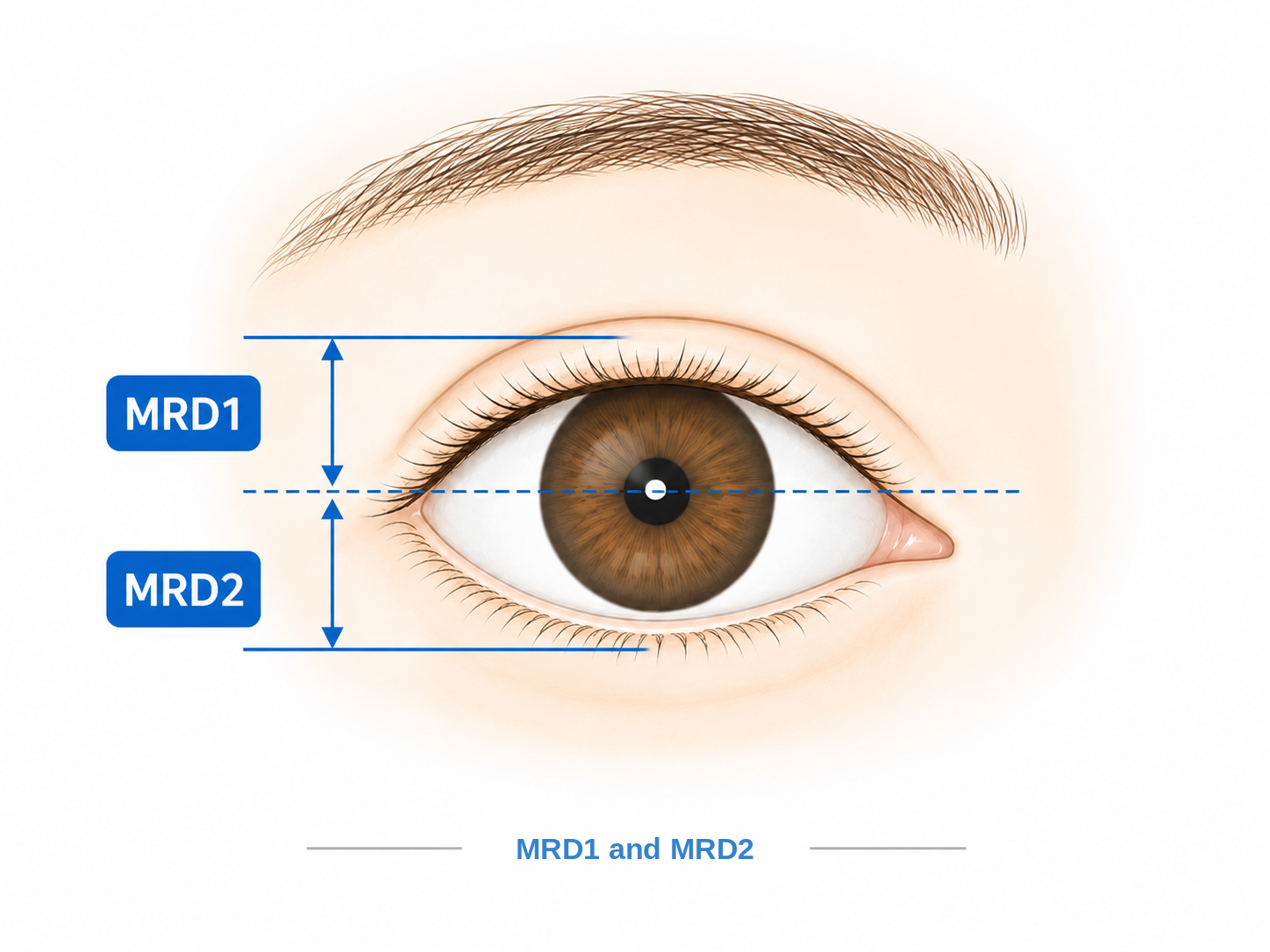
MRD1 and MRD2
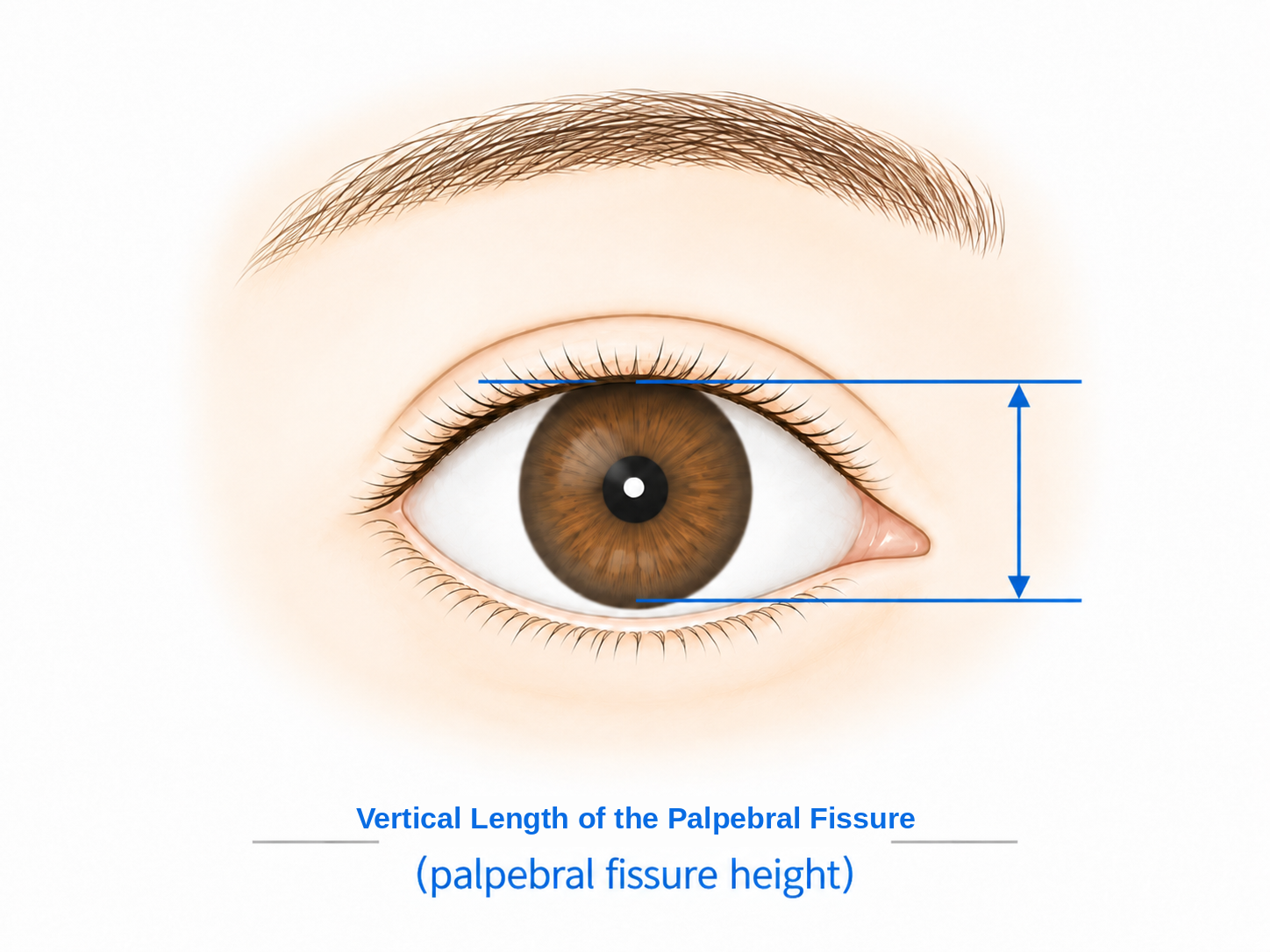
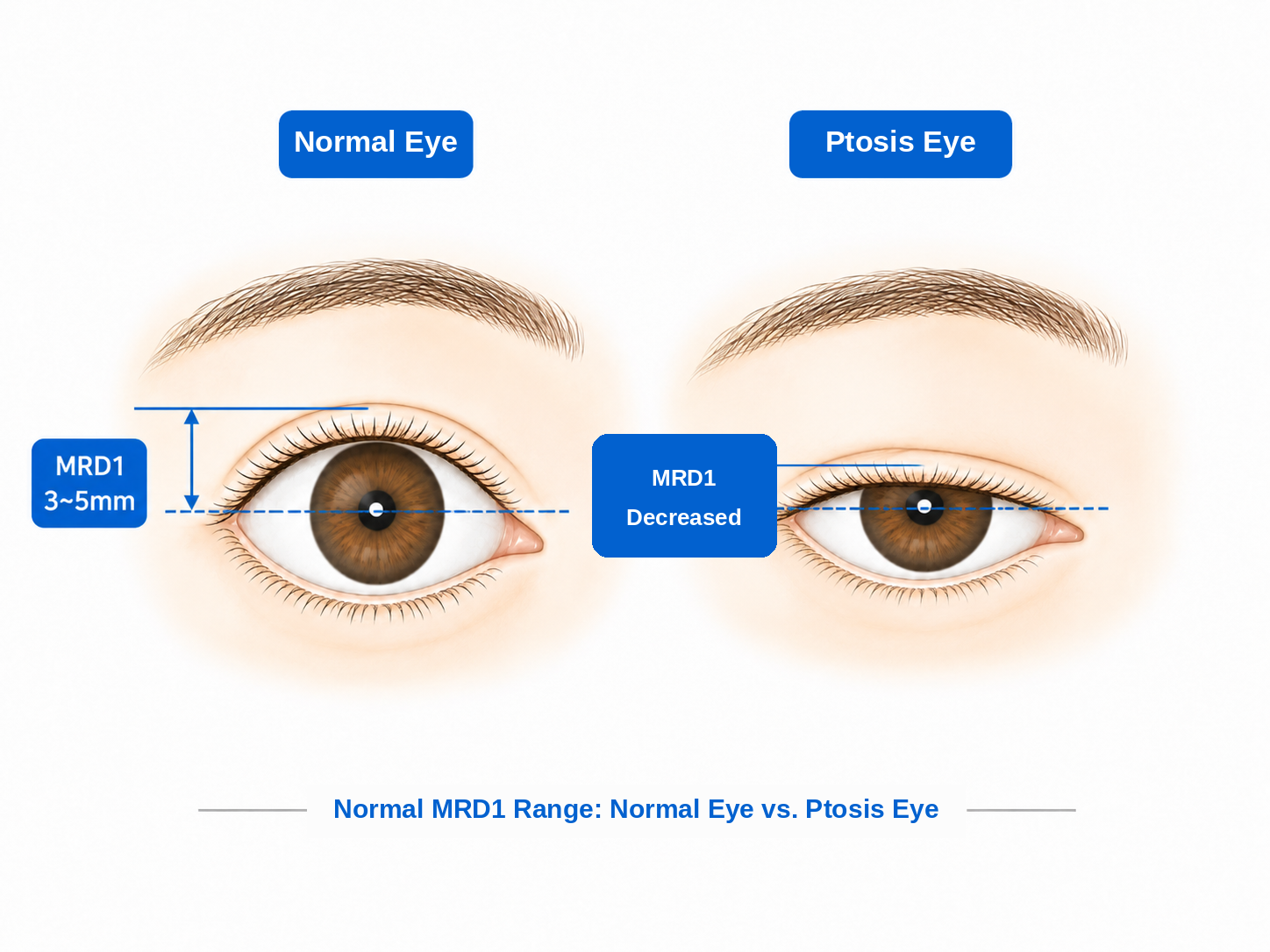
Normal MRD1 is 3–5mm; the difference between a normal eye and a ptosis eye
What Kind of Eyes Don't Need Ptosis Correction?
In actual clinical practice, patients are asked to open their eyes comfortably. If about 80–90% of the iris is visible, the eyes are opening well; if less than 70%, ptosis is likely present.
Are There Cases Where Surgery Is Done Even When the Numbers Are Normal?
Ptosis correction surgery is sometimes performed for functional reasons. This includes people who often hear that they look sleepy or tired, or whose eyelids block their field of vision, causing them to tilt their chin up to see. People who raise their eyebrows using forehead muscles are actually relying heavily on those muscles. Those who find it hard to open their eyes by the afternoon are also candidates for surgery.
Check Item | Not a Candidate | Diagnosis Needed |
MRD1 | 4mm or more | Less than 4mm |
Iris Exposure | 80~90% | Less than 70% |
Forehead Use | None | Raised eyebrows |
Afternoon Fatigue | None | Difficulty opening eyes |
My Criteria for Judging Ptosis Correction
I don't look at ptosis correction in isolation. I also consider iris exposure, horizontal eye length relative to the inter-eye distance, and the angle of the outer corner. Whether the tired-looking appearance comes from opening strength or horizontal length changes the surgical approach. I personally oversee everything from consultation to surgery and recovery.
Frequently Asked Questions
Q. Are ptosis correction and double eyelid surgery different procedures?
A. Double eyelid surgery creates a crease line, while ptosis correction adjusts eye-opening strength. Their purposes are different.
Q. Can only one eye have ptosis?
A: Yes. If the left and right MRD1 values differ, the eyes can look asymmetrical, and both sides are not treated with the same surgical approach.
Q. Does ptosis correction make the eyes look bigger?
A. As eye-opening strength improves, more of the iris is revealed, making the eyes look more defined. However, the horizontal length of the eye does not actually increase.
Q. Is the habit of using forehead muscles to open the eyes also a candidate for surgery?
A. This is often the case. It means the eye-opening strength is insufficient and the forehead muscles are compensating, so we check for forehead use during the consultation.
Q. Can ptosis correction be done without double eyelid surgery?
A. It's possible, but combining the two is usually recommended, since forming a crease as the upper eyelid folds also has a significant effect of making the eyes look bigger. For incisional ptosis correction, an incisional double eyelid crease needs to be made to access and adjust the eye-opening muscle, so if you'd really prefer no visible crease, a low, hidden inner-fold line can be used instead. For non-incisional ptosis correction, only the Müller's muscle at the back is folded, so it can be done without creating a visible crease at all — though the effect may be somewhat less pronounced.
Terminology
Term | Meaning |
Ptosis (Blepharoptosis) | A condition where the upper eyelid droops and the eye cannot open fully. |
MRD1 | The distance between the light reflex at the center of the pupil, when a light is shone into the eye, and the edge of the upper eyelid. About 4mm is normal. |
MRD2 | The distance from the same reflex point to the edge of the lower eyelid. Viewed together with MRD1, it shows how wide the eye opens. |
lid margin | Refers to the edge of the eyelid. It serves as the reference line for judging drooping. |
Ptosis correction | A surgery that improves ptosis by adjusting eye-opening strength. Its purpose differs from double eyelid surgery. |
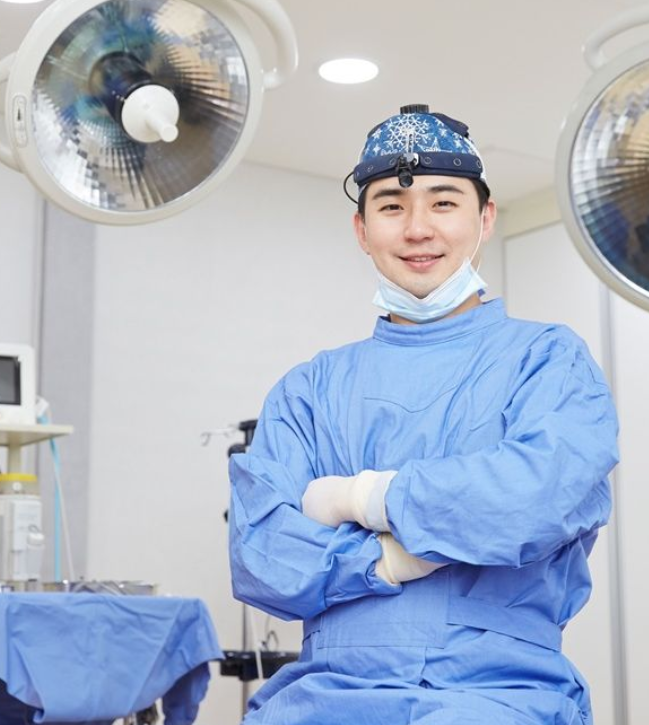
Choi Seung-ho | Director, Chai Plastic Surgery · Plastic Surgery Specialist
Current) Director, Chai Plastic Surgery
Plastic Surgery Specialist, Seoul St. Mary's Hospital
Clinical Professor, Dept. of Plastic Surgery, Seoul St. Mary's Hospital
Member, Korean Association of Plastic Surgeons
Member, Korean Society for Aesthetic Plastic Surgery
Member, Korean Wound Society
Member, International Society of Aesthetic Plastic Surgery
International Confederation for Plastic Surgery (Active Member)
European Academy of Cosmetic Surgery (Active Member)
Japan Society of Aesthetic Surgery (Active Member)
[Notice]
This column was written to provide information to help you understand eye plastic surgery. Diagnosis and surgical methods may vary depending on individual eye conditions, and an accurate diagnosis should be obtained through consultation at a medical institution.